
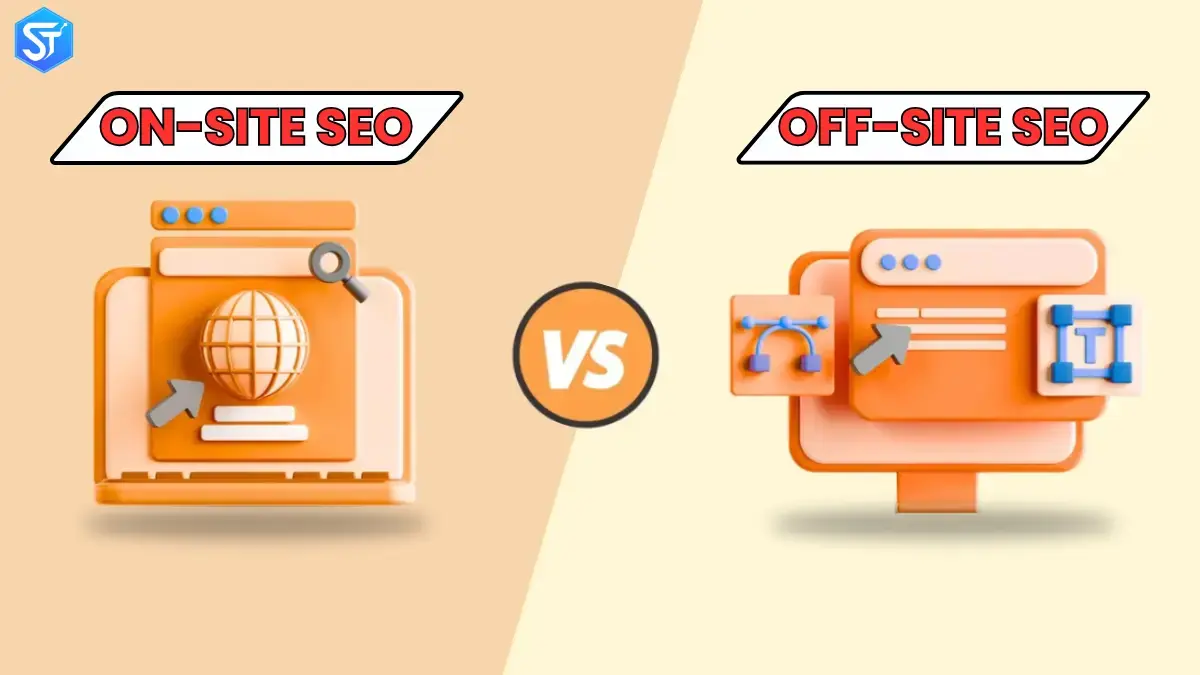
On-site and off-site SEO are two different parts of search engine optimization, and both play a key role in improving performance. On-site SEO focuses on improving your own website, while off-site SEO relies on actions that occur outside of your site.
For search engines, the real difference between on-site and off-site SEO is what each aims to achieve. The goal of on-site SEO is to build trust and make your pages easy for search engine bots to read and understand. In contrast, off-site SEO works to send strong signals primarily through links from other sites that your content is valuable and deserves to rank high in search engine results.
What Is Search Engine Optimization?
Search engine optimization (SEO) is the process of refining a website so that search engines like Google and Bing can find and rank it when users search by text or voice. When a site is well-organized with clear topic clusters and good structure — search engines can crawl and index it more easily. This helps your site appear in relevant results and in special places like featured snippets or the Knowledge Panel.
Modern SEO relies on machine learning algorithms (such as Google’s Hummingbird and RankBrain) that interpret user intent, location, and content relevance. Good SEO follows white-hat SEO practices, bad SEO (black-hat) tricks search engines and can remove your site from search results.
What Is On-Site SEO?
On-Site SEO is a simple method that you use to improve each web page so that it ranks better and attracts the right visitors from search engines. In search platforms like Google, Yahoo, and Bing, On-Site optimization includes all the factors that directly influence your site and page ranking in organic search results. It helps your content appear to the right audience and improves overall visibility.
Key Components of On-Site SEO
- Content Quality: Write useful, clear, and engaging content while placing keywords naturally.
- Keyword Optimization: Add primary and relevant keywords in headings, paragraphs, and meta sections.
- Meta Tags: Create compelling titles and descriptions that include your target keywords.
- URL Structure: Keep URLs short, clean, and easy to understand with meaningful keywords.
- Internal linking: Link related pages together to support easy navigation and share link value.
- User experience (UX): Improve loading speed, mobile performance, and overall layout for better usability.
- Technical SEO: Work on indexing, crawlability, schema markup, and canonical tags for strong technical support.
What Is Off-Site SEO?
Off-Site SEO is a method you use to increase your website’s ranking by improving its reputation outside of your own pages. Many users think that Off-Site SEO simply means link building, but it includes more activities like promotion, blogging, improving design, social bookmarking, and other ways that help your site gain authority on search engines (SERPs).
Key Components of Off-Site SEO
- Backlinks: Get quality links from trusted websites to improve authority and ranking power.
- Social Media Marketing: Share meaningful posts and interact with users to increase reach and visibility.
- Reputation Management: Build trust by tracking and shaping how people see your brand online.
- Influencer Marketing: Partner with influencers to reach a wider audience and build credibility.
- Brand Mentions: Get mentioned on respected platforms even without links to build authority.
- Guest Blogging: Write for other websites to gain backlinks, exposure, and more readers.
Read More: Top 10 Google Ranking Factors: You Need to Know in 2026
Difference Between On-Site And Off-Site SEO: A Complete Breakdown
Here’s a revised comparison of on-page and off-page SEO presented in the same table format:
| Aspect | On-Site SEO | Off-Site SEO |
| Definition | You improve elements inside your website to boost performance. | You work on activities outside your site to increase reach and trust. |
| Focus | You shape content, HTML parts, and overall page layout. | You build outside connections, brand value, and online authority. |
| Key Elements | – Strong Content- Smart Keyword Use- Meta Details- Clean URL Setup- Internal Linking | – Backlink Building- Social Media Promotions – Reputation Management- Influencer Support- Brand Mentions |
| User Experience | You aim to offer a smooth and helpful user experience. | You focus on growing outside trust and credibility. |
| Page Load Speed | You improve speed to offer better user satisfaction. | It doesn’t act directly, but it influences user actions indirectly. |
| Mobile-Friendly Design | You make sure pages work smoothly on all device types. | It’s not the main area but still supports online growth. |
| Technical SEO | You handle crawling, indexing, and other technical tasks. | You mainly deal with outside signals and activities. |
| Backlinks | You manage internal links within your own pages. | You earn strong and relevant backlinks from other sites. |
| Social Media Presence | It’s not the main part but can support your strategy. | You stay active on social platforms to boost visibility. |
| Authority Building | You work on building trust through helpful content. | You raise your site’s authority through external support. |
| Link Building | You focus on linking pages inside your website. | You grow a natural and diverse backlink profile from outside sources. |
| Social Signals | Not directly linked but can affect engagement. | Likes, shares, and social interactions help authority. |
| Content Marketing | Content creation plays a key role in on-page work. | You produce valuable content for sharing across external platforms. |
Continue Reading: Are HTML Tables Good or Bad for SEO? A Complete Guide to Table Optimization
Effective SEO Tips for Better Rankings
On-Site SEO Tips
- Optimize on-page elements: Update your page titles, meta descriptions, and header tags with meaningful keywords so that search engines can easily understand what your page has to offer.
- Create high-quality content: Write clear, useful, and well-explained content that directly matches what users are looking for.
- Use internal links: Add links to other helpful pages on your website to guide readers and balance authority on important pages.
- Optimize images: Add meaningful alt text to your images and compress them to increase page speed and accessibility.
- Structure URLs clearly: Use short, clean, and descriptive URLs that both users and search engines can read without confusion.
Off-Site SEO Tips
- Build High-Quality Backlinks: Get links from trusted and relevant websites to strengthen your site’s authority.
- Engage on Social Media: Use social platforms to improve brand reach, share useful content, and attract more visitors.
- Guest Blogging: Write valuable blogs for other sites in your industry to increase exposure and gain strong backlinks.
- Participate in Online Communities: Join active forums and groups related to your niche to build trust and participate in discussions.
- Local SEO and References: If you offer local services, keep your business details consistent across all major directories.
Important Things to Remember
Both onsite and offsite SEO play a key role in website development. But it’s always wise to start with onsite SEO because you need strong, clear content before you can promote anything.
Keep in mind that even the smartest marketing plan won’t yield results if your site isn’t useful. You can spend a lot of money on advertising, but if your pages don’t provide real value to the audience you’re trying to reach, people won’t stay or return.
You should also explore different content ideas like infographics, simple videos, and other interactive elements that make the visitor journey more enjoyable and engaging.
Also Read: WeChat Marketing: Top Social Media Platform (A Simple Guide)
Is it possible to rank high in the SERPs with just one aspect of SEO optimization?
Yes! You can achieve strong SERP rankings by focusing on just one SEO approach, whether it’s on-page SEO or off-page SEO.
However, your ranking success largely depends on your competition and how effectively they target and optimize their content for the same keywords. When competitors implement strong optimization strategies, their pages will appear ahead of yours in search results. In a highly competitive landscape, it becomes difficult to reach the top positions if you rely on just one SEO method. To improve your chances, you should combine both on-page and off-page SEO efforts.
FAQs:
Q1. How to do on-page and off-page SEO together?
The strongest SEO results come when the two work together. You start by finding the right keywords through tools like Google Keyword Planner or Ubersuggest. Then, you create helpful content that naturally and easily uses those keywords.
Q2. Is off-page SEO still effective for SEO?
Yes, it still matters a lot. Quality backlinks are one of the most powerful ranking signals in Google’s system.
Q3. How do you measure success and track progress?
We track growth through keyword positions, website visits, conversions, and overall ROI. We use analytics platforms, GMB insights, and regular SEO reports to check how well your site is performing.
Q4. How do you approach competitor analysis?
We study your competitors’ backlinks, keywords, and methods to find new opportunities for your site. This helps you get ahead of them and stay strong in search rankings.