
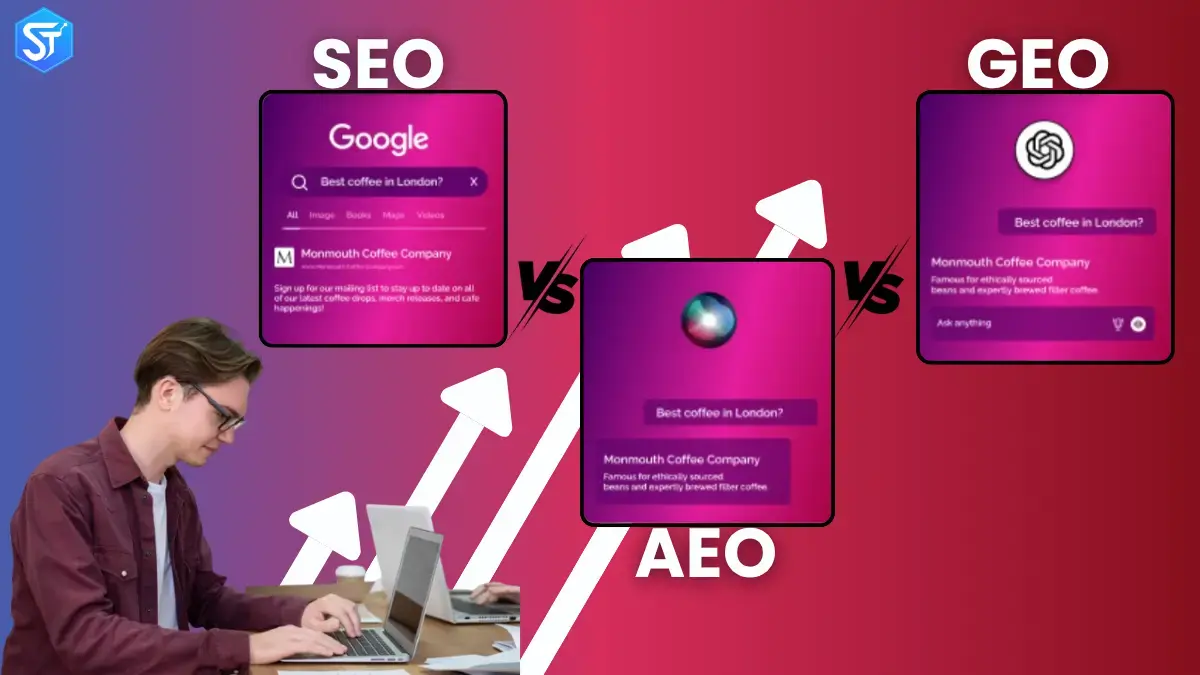
The SEO landscape is facing new obstacles (the story of my life). One of them is an old problem: Google keeps pushing organic listings down the results page by adding more SERP features that compete with the classic 10 blue links. It started with ads, then came the “People Also Ask” box and quick answers, and now we have AI overview. Because of this, SEOs should also turn their attention to AEO (Answer Engine Optimization).
The next challenge is new: users are increasingly moving away from traditional search engines and towards AI-powered platforms like ChatGPT and Gemini, which deliver direct, link-free answers, making it less likely for websites to earn traffic. To stay ahead, SEOs must now embrace GEO (Generative Engine Optimization).
What is SEO?
Search Engine Optimization (SEO) helps increase a website’s online visibility. Its main goal is to secure a higher ranking in search engine results. Greater visibility leads to increased organic traffic. Businesses rely on SEO to reach people who are actively searching for their products or services.
How does SEO work?
To achieve success with SEO, companies use a combination of powerful techniques:
On-page SEO techniques:
Titles, meta descriptions, and keywords should match user search intent. These factors help search engines understand your web pages accurately and display them for the right queries.
Off-page SEO strategies:
Gaining quality backlinks from reputable websites strengthens domain authority. These backlinks act as trust signals, showing search engines that your content is credible and valuable.
Technical SEO Checklist:
Your website should load quickly, be mobile-responsive, and error-free. Focusing on elements like site performance, mobile-first design, and easy navigation improves user experience and crawlability.
Local SEO Best Practices:
Using local keywords helps businesses attract a nearby audience. Adding location details like city names, contact information, and optimizing Google Business Profiles improves local search rankings.
Content Optimization Strategy:
Your content should be relevant to what users are looking for. Create meaningful, well-researched content that answers their questions and provides value. Always aim for quality and clarity rather than overusing keywords.
Businesses that implement SEO effectively experience steady, long-term success. Search Engine Optimization builds credibility, authority, and audience engagement – driving sustainable growth. Partnering with an expert SEO agency can help improve and maximize these strategies for better results.
What is Answer Engine Optimization (AEO)?
Answer Engine Optimization (AEO) is the practice of shaping your content in a way that AI-powered search systems – known as answer engines – can easily read, interpret, and display. These systems include Google’s Search Generative Experience (SGE), Apple’s Siri, Amazon Alexa, OpenAI’s ChatGPT, and other voice-powered assistants. As AI becomes the primary gateway to finding information, AEO is essential for businesses that want their content to appear as a trusted and authoritative answer to a user’s question.
Key principles of AEO:
Structured content:
Organize your information in a clear, easily digestible format, such as bulleted lists, question-and-answer layouts, comparison tables, and how-to steps.
Entity-based optimization:
Go beyond basic keyword targeting and focus on entities—like people, brands, and concepts—to build strong local expertise. Use trusted sources like Wikipedia and Google’s Knowledge Graph for context.
Conversational search readiness:
Optimize your content for natural, long-form voice queries. Write the way people talk, not the way they type. This improves visibility in AI summaries and voice search results.
Why AEO matters in 2026:
- AI-generated responses now dominate top search positions.
- Answer engines rely on structured, entity-rich data to provide immediate results.
- Zero-click search continues to grow as users find their answers directly on the results page.
- Google’s SGE and ChatGPT use structured web data to generate summaries – prioritizing AEO-optimized sites.
What is GEO?
Generative Engine Optimization (GEO) focuses on aligning digital content with AI-powered systems. It’s all about creating conversational and AI-friendly content that naturally connects with readers and algorithms. Modern tools like ChatGPT and Bard place more importance on purpose, clarity, and context than traditional keyword stuffing.
AI marketing platforms are leading this shift. Brands need to optimize their content for these smart technologies. GEO helps ensure that your content remains visible and impactful on AI-powered platforms.
Also Read: What is Data-Driven Marketing? Benefits & Strategy In 2026
How does GEO work?
To effectively understand and implement GEO, businesses need:
AI-friendly content:
AI-focused marketing strategies create content that algorithms can easily recognize and rank. Using AI marketing tools, brands can track patterns and insights to produce content that performs exceptionally well.
Conversational tone:
GEO encourages a natural and relatable writing style. When content feels human and engaging, it connects better with audiences and AI-powered search engines.
E-E-A-T principles:
Experience, expertise, authenticity, and trust are essential to optimizing AI-friendly content. Applying these principles helps your content gain visibility and maintain credibility.
For example, GEO-optimized content directly answers user questions and includes meaningful follow-ups that increase engagement and user satisfaction.
| Feature | SEO | AEO | GEO |
| Primary Goal | Boost visibility and rankings in organic search results | Deliver clear, AI-understandable responses | Strengthen online reach in specific areas or regions |
| Focus | Keywords, quality content, and link-building | Entities, user queries, and structured markup | Local intent, NAP accuracy, and map presence |
| Best For | Suitable for all types of businesses | Great for blogs, ecommerce platforms, and B2B websites | Ideal for local brands, franchises, and small businesses |
| Optimization Style | Detailed, in-depth, and informative | Short, structured, and context-based | Location-focused, supported by citations and customer reviews |
| Main Tools | Google Search Console, Ahrefs, SEMrush | Schema.org, AnswerThePublic, and ChatGPT-based insights | Google Business Profile, Moz Local, and BrightLocal |
How AEO, GEO, and SEO Work Together
Rather than working in isolation, AEO, GEO, and SEO are considered interconnected components of a comprehensive strategy. Each reinforces the other, creating a coherent approach to modern search.
SEO builds a strong foundation with broad keyword reach and technical excellence.
AEO helps you appear in AI-powered and voice search results by providing clear, structured answers.
GEO connects your business with local searchers by leveraging location and proximity-based intent.
Continue Reading: 15 Ways Social Media Influencers Make Most Money
Example Integrations:
A spa chain with multiple locations could:
- Use SEO to rank for “stress relief spa treatments” through detailed blogs and guides.
- Use AEO to format these guides into clear steps and answer questions like “What spa treatments help with anxiety?”
- Use GEO to optimize listings for “spas near me” and create location-specific landing pages.
Centralized reporting with AgencyDashboard:
- Track AEO, GEO, and SEO metrics in a single dashboard.
- Monitor performance by schema, location, and content category.
- Create automated white-label reports for clients or stakeholders.
- Observe ranking changes by location, device, and SERP features.
Conclusion
Search is moving beyond simple rankings – it is now focused on visibility in SERPs, voice platforms and AI assistants. Businesses that embrace SEO, AEO and GEO today will ensure a strong and lasting digital presence tomorrow.
Read More: Wix SEO vs WordPress SEO: Who Has The Best Features?
FAQs: Questions & Answers
SEO focuses on ranking in search engines like Google. GEO (Generative Engine Optimization) ensures AI tools like ChatGPT, Perplexity, or Claude can accurately interpret and reference your content. AEO (Answer Engine Optimization) structures your Webflow pages to appear as authoritative answers in voice search and AI summaries. Broworks uses all three to build holistic visibility strategies for clients.
GEO helps your Webflow site appear correctly in generative AI results. Without GEO, AI models might misinterpret or ignore your content. Implementing structured data, clear metadata, and content context helps ensure your brand is cited correctly in AI-generated answers, protecting both visibility and reputation.
AEO focuses on answer-first visibility, optimizing for snippets, voice search, and AI assistants rather than just keyword rankings. It involves structuring content into FAQs, schema, and concise summaries so search engines and AI engines can pull direct answers from your site.