
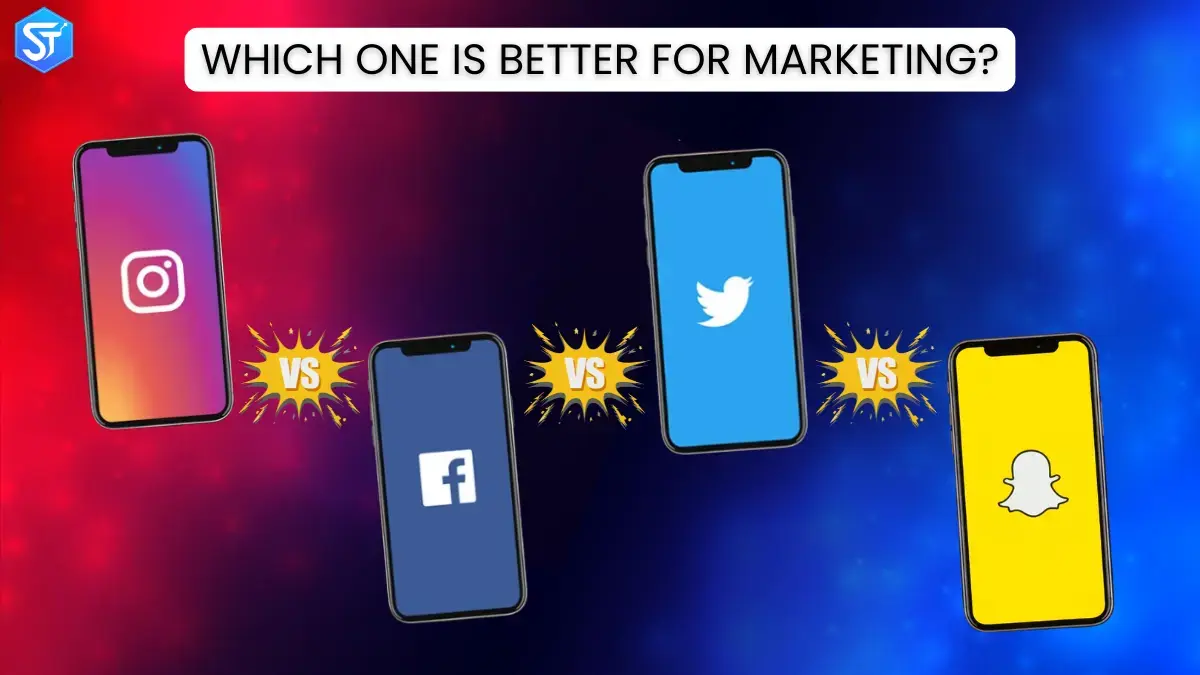
Social media now plays a vital role in our daily lives, helping us communicate with people around the world and providing a constant stream of information. Because of this, it is important to know the differences between social media platforms.
With so many options, it can be difficult to choose the right platform for you and what you need. Each platform has its own advantages and disadvantages.
In this article, we will look at the main differences between popular social media platforms such as Facebook, Twitter, Snapchat, and Instagram, and how these differences can affect how well your online content performs.
Key Takeaways
- Each social media platform works differently — Instagram and Snapchat focus on visuals, Facebook on community and news, and Twitter (X) on quick text updates and trending topics.
- Content lifespans vary: Instagram and Facebook keep your content alive for a long time, Twitter posts are quickly buried by new content, and Snapchat posts disappear after just 24 hours.
- Twitter works best for live engagement: It is ideal for brands that want to share live updates, ask questions, and quickly start conversations with their followers.
- Facebook offers broad reach: It reaches the largest audience and lets you post longer content, videos, images, and run strong ad campaigns that target the right people.
- Instagram is highly visual: It sells emotions and lifestyle through beautiful images, reels, and stories — making it a good fit for brands with strong visual products.
- Snapchat connects with youth: It reaches a younger audience through fun, personalized, and unseen content that feels more personal and real than other platforms.
- Match the platform to your goals: For visual brands, Instagram and Snapchat work best. For broad reach and community building, Facebook leads. For news and live engagement, Twitter stands out.
- Ad costs vs. Engagement: Facebook has the lowest ad spend while Snapchat is the most expensive – but Snapchat’s swipe-up rate is five times higher than most other platforms.
- Instagram ads drive results: They offer stronger ad recall and higher click-through rates, making them highly effective, even if they are a bit more expensive than Facebook ads.
- The best social media strategy: It focuses on one or two platforms that are relevant to your audience and business goals – rather than trying to reach everywhere at once.
How do each social media platform work?
Instagram and Snapchat focus primarily on pictures and videos, while Facebook is more about sharing the latest news. Facebook asks users to share fun things, while Twitter (now known as X) is mostly about sharing the latest news and quick updates.
Note: After being acquired by Elon Musk’s company X.com, Twitter changed its name to X on July 31, 2023. But in this blog, we will still use the Twitter name because many people know it by that.
Your content on Instagram and Facebook lasts a long time. But on Twitter, tweets last forever, although new popular tweets quickly push old ones down. On Snapchat, snaps disappear after 24 hours.
When we look at Snapchat and Instagram, Instagram users post photos, reels, and videos on their profiles. Snapchat users send pictures and videos directly to friends.
If you compare Instagram to Twitter, Instagram focuses on photos and reels. Twitter is mostly about text and hashtags.
Comparing Facebook and Snapchat, Facebook allows you to share posts publicly or privately. Snapchat is only for private chats with friends.
How do I know where my niche is?
To choose the right place to spend your time and effort, you need to be clear about two things: who you are and what you want to share. Then, learn the main advantages and disadvantages of each platform so that there is a place that is right for you and what message you want to send.
We can only help with the second part – the first part is to find out what is for you. But the rest is here. You will learn what kind of content users like on different social media and how you can use it well.
Woman with binoculars in the field
This platform allows you to get closer to your followers. It is full of conversation, fast news and opinions. Here is what Twitter users want:
Engagement: They want to talk to you and feel heard. Ask them questions, get their thoughts and ideas about your brand or product. Polls are great! Let them be part of your story.
Quick News: Twitter users want to know what’s new and popular quickly. Short updates and teasers about upcoming events keep people interested.
Learn: Experts and professionals share useful advice here. People love to get tips and stories about how you got to where you are now. Don’t forget, there are a lot of people looking up to you.
Make friends: Your next business partner could be just a message away. Reach out – you never know who’s on the same path as you.
But be careful:
Cons: A small opinion can quickly lead to big problems. Some people can quickly break your words and start fights. Whether you believe in cancel culture or not, this can damage your brand.
Tip: Share bold ideas sometimes but be careful – Twitter remembers everything.
With over 2 billion users, Facebook has the largest reach and easiest tools for business. Here are the good points:
Community: Facebook reaches a lot of people. You can share deals, news, or long posts about your brand’s goals and plans because users love to read more here.
Talk: Like Twitter, people love to engage in conversations. Share useful content, even if it’s not just about your niche. Comments and replies help you grow, so have someone ready to respond.
Multiple formats: Facebook users love videos, pictures, charts, and more. You can create many types of posts and find people who like them.
One thing to know about Facebook:
Rules: Avoid bad language, dark jokes, or specific words or you could get banned. Watch what you post.
This is a place to show off your brand visually. Instagram sells emotions and lifestyle. Users want:
Inspiration: Pictures, reels, and stories create emotions. Use these to show off your brand’s good side and happy customers.
Good looks: Show off your brand’s style with colors and shapes. Keep a static look to stand out, unless you’re famous.
Show off your work: Followers want to see how you do things. Stories and Reels help you show off your daily work, tips, and short lessons that they can save. Well-crafted Reels and visual content also help increase reach and Instagram views, making it easier for new users to discover your brand. Some users even explore stories discreetly using a private Instagram story viewer to stay updated without direct interaction.
But there are some tricky parts of Instagram:
Work hard: You have to post every day to stay visible, mostly Reels and Stories. If you don’t want to create great content every day, this might not be for you.
Shallow: People here want fun visuals. Long posts with a lot of text are usually ignored. Keep your content short and sweet.
Snapchat
Snapchat is about quick, real moments that disappear quickly. It’s mostly popular with young people who want fun and private sharing. Users on Snapchat want:
Real-time fun: They want a casual, behind-the-scenes look at what’s happening right now. Share quick photos and short videos that show off the fun side of your brand.
Personal touch: Snapchat feels private, so users expect more personal and less polished content. It’s a great place to build trust by showing the real people behind your business.
Snappy and sweet: Content only lasts for a short time, so make your photos interesting and to the point. Keep it light and playful.
But be prepared:
Fast pace: Because content disappears quickly, you need to post frequently to stay in the minds of followers.
Limited reach: Snapchat doesn’t show your posts to a wider audience like other platforms, so it works best if you already have a loyal fan base.
Also Read: How to Find Drafts on Facebook for PC, Android & iOS? 2026 Guide
Choosing the Right Platform for Your Marketing Goals
You might be asking yourself, “Which one is really best?” The answer depends on your audience, resources, and business goals. Each platform has its own strengths, and sometimes a combination of several works best.
Brands with strong visual appeal
If you’re creative or your products look great on video, Instagram and Snapchat are great choices.
Reach a wide range of people
Facebook is still the leader in reaching a wide audience and has strong targeting tools. That’s why many companies use Facebook marketing successfully in World.
Fast and live communication
If your brand follows trends and shares live updates, don’t forget Twitter (X). When used correctly, its fast pace can help you get noticed quickly.
Connect with a young audience
If you want to reach a younger audience, Snapchat is a good option. Its special features help you stand out in a busy social media world.
Important Lessons and What to Do Next
The best social media plan connects with your audience and fits your brand’s style. Don’t try to be on every platform at once. Instead, pick one or two, learn them well, and change your plan based on what works.
Are you ready to improve your social media? Maybe you need a partner who knows how to create a plan that gains followers, generates engagement, and converts them into customers.
Contact us now, and we can talk about how to tell your brand’s story on the most important platforms. Social media marketing isn’t just about posting content; it’s about building a community, starting conversations, and growing your business in a rapidly changing digital world. Let’s do it!
You may also like: WeChat Marketing: Top Social Media Platform (A Simple Guide)
Different between Facebook, Instagram, Twitter (X) and Snapchat
Social media platforms differ in their purpose, audience, and content formats, making each suitable for different types of users and businesses. Here’s how Facebook, Instagram, Twitter (X), and Snapchat stand out from one another.
Here’s a comparison of Facebook, Instagram, Twitter (X), and Snapchat:
| Feature | Snapchat | |||
|---|---|---|---|---|
| Primary Use | Social networking, community building, brand marketing | Photo & video sharing, influencer marketing | Microblogging, real-time updates, discussions | Ephemeral messaging, interactive content |
| Content Type | Text, images, videos, live streams, events | Images, videos, Stories, Reels | Short text posts, images, videos, GIFs | Snaps, Stories, AR lenses, Spotlight videos |
| Target Audience | All age groups, professionals, businesses | Younger audience (18-34), visual-centric users | News-savvy, professionals, trend-followers | Gen Z, casual social interactions |
| Engagement Features | Likes, comments, shares, groups, pages | Likes, comments, shares, Stories, Reels | Retweets (Reposts), likes, replies, trending topics | Snaps, Stories, Streaks, filters |
| Advertising Options | Facebook Ads, Marketplace, business pages | Instagram Ads, influencer collaborations, Shopping | Promoted tweets, trending ads | Snapchat Ads, AR lenses, geofilters |
| Best For | Community building, long-form content, networking | Influencer marketing, brand visibility, product showcasing | Real-time updates, public engagement, industry trends | Youth engagement, interactive marketing, storytelling |
| Algorithm Focus | Engagement-based, prioritizes personal connections | Visual-first, engagement-driven | Real-time updates, trending topics | Recent & interactive content first |
| Monetization | Ads, in-stream videos, branded content | Instagram Shopping, influencer sponsorships | Subscription model, ad revenue sharing | Spotlight payouts, ads, influencer partnerships |
| Post Lifespan | Long-lasting, remains on profile | Feeds refresh quickly, longer than Snapchat | Fast-moving, tweets get buried quickly | Snaps disappear after 24 hours unless saved |
| Privacy Settings | Public/private profiles, customizable settings | Public/private accounts, close friends feature | Mostly public, but has private messages | Messages disappear, high privacy focus |
Instagram vs Facebook vs Twitter vs Snapchat: Cost of Ads
It’s a good idea to use Instagram ads on photos, videos, carousels, and stories. These ads get 2.5 times more clicks than ads on other social media platforms.
Instagram has robust targeting options and a higher click-through rate (CTR). Its ad costs are slightly lower than Twitter and Facebook. The average CPM on Instagram is around $6.70. But as more businesses join, these costs can drop. Instagram offers:
- 97% increase in ad recall
- 16-point average increase in ad recall
- 7x higher Nielsen ad recall compared to other data
Facebook ads cost between $0.25 and $3.30 per click. The cost depends on the industry, audience size, and ad quality.
Facebook is cheap, which is why 1.5 million businesses spend on mobile ads, and 92% of them use Facebook ads.
There are three types of ads on Twitter:
- Promoted Tweets
- Promoted Accounts
- Promoted Trends
Promoted Tweets and accounts cost between $0.50 and $4.00 per engagement, while Promoted Trends costs around $200,000 per day.
The cost to click, reply, retweet, or like a paid Tweet ranges from $0.50 to $2.00, depending on targeting. For local campaigns, it averages $1.35 per engagement.
Further Reading: What Is Technical SEO? Basics & Best Practices (A Guide for 2026)
Snapchat
Snapchat ads cost more than other social platforms, but they’re worth it. The swipe-up rate for Snapchat ads is five times higher than the average CTR on other sites. Snap ad campaigns start at $10,000 per month.
Sponsored Lenses cost $450,000 per day from Sunday to Thursday, $500,000 on Friday and Saturday, and $700,000 or more during holidays or special events.
If we compare these platforms by users, growth, and ad revenue, Facebook is ahead in social media advertising.
It’s important to compare costs on these platforms before spending on ads.
Instagram ads are more expensive than Facebook ads, but now businesses can use Facebook’s Ad Manager to simplify PPC advertising.
Twitter ads are cheaper than Instagram ads.
Snapchat’s ad prices change by date, giving you more options when planning your ads than Twitter or Instagram.
Currently, Facebook is the cheapest platform, and Snapchat is the most expensive.
Read More: What Is On-Page SEO? Basics & Best Practices (A Guide for 2026)